
NOTE
1.30 InnoDB MVCC
How InnoDB uses transaction IDs, undo-based row versions, and Read Views so readers can observe consistent historical versions without blocking writers.
This is a historical learning note and may contain outdated or incomplete understanding.
1. What Is MVCC?
Multi-Version Concurrency Control lets a transaction read an appropriate historical version of a row rather than forcing every read to wait for concurrent writers.
InnoDB combines row metadata, undo records, and a Read View to decide which version is visible.
2. Version Chain
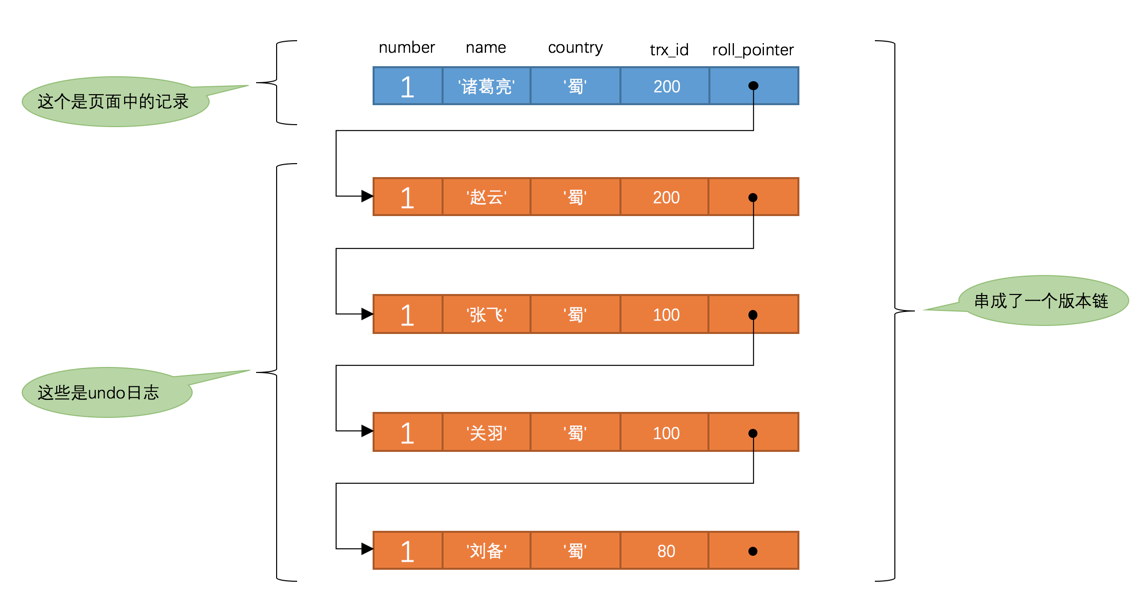
InnoDB records include transaction/version metadata such as the transaction ID that last changed the row and a pointer into undo information. Older row images can be reconstructed through undo records, forming a logical version history.
3. Read View
A Read View captures information about transactions that were active when the view was created. When InnoDB encounters a row version, it compares that version’s transaction ID with the view to decide whether the creating transaction is visible.
Conceptually:
- versions created by the current transaction are visible to itself;
- versions committed before the snapshot boundary are visible;
- versions from transactions still active at snapshot creation are not visible;
- versions created by transactions that started after the snapshot are not visible.
If the newest version is not visible, InnoDB follows undo history to find an older visible version.
4. Read Committed vs. Repeatable Read
- Under Read Committed, consistent reads create a fresh read view per statement.
- Under Repeatable Read, consistent reads in a transaction normally share the same snapshot after it is established.
MVCC mainly improves read/write concurrency. It does not eliminate the need for locks when transactions modify rows or explicitly request locking reads.